
Make every visit worth more before you buy another one.
Traffic is the expensive part. What happens once it lands is decided by the store: how it is built, what it recommends, what it bundles, what it asks, and how little it gets in the way. We build that store when it needs building, and then we keep making it worth more.
- Free audit within 2 days
- No account access needed
- You own every account
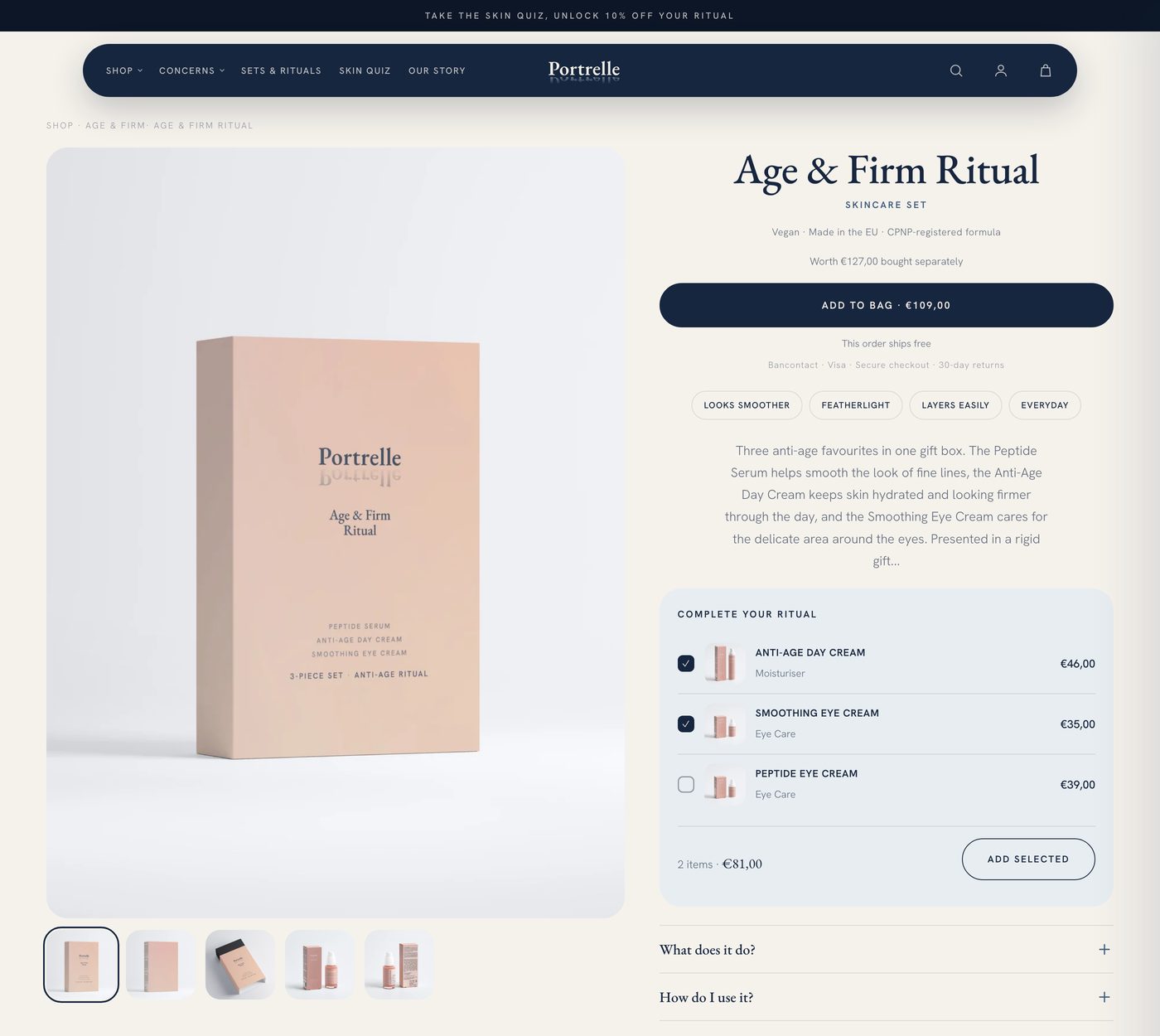

The hard builds, live on real stores.
A quiz that builds the routine, a cart that sells the next item, delivery dates on the shopper’s clock, stock on every size and a Journal that links into the shop. The Portrelle case study walks one whole build. Where this sits in the order of work is in improving ROAS without shrinking the business.
The hard parts, built into the theme.
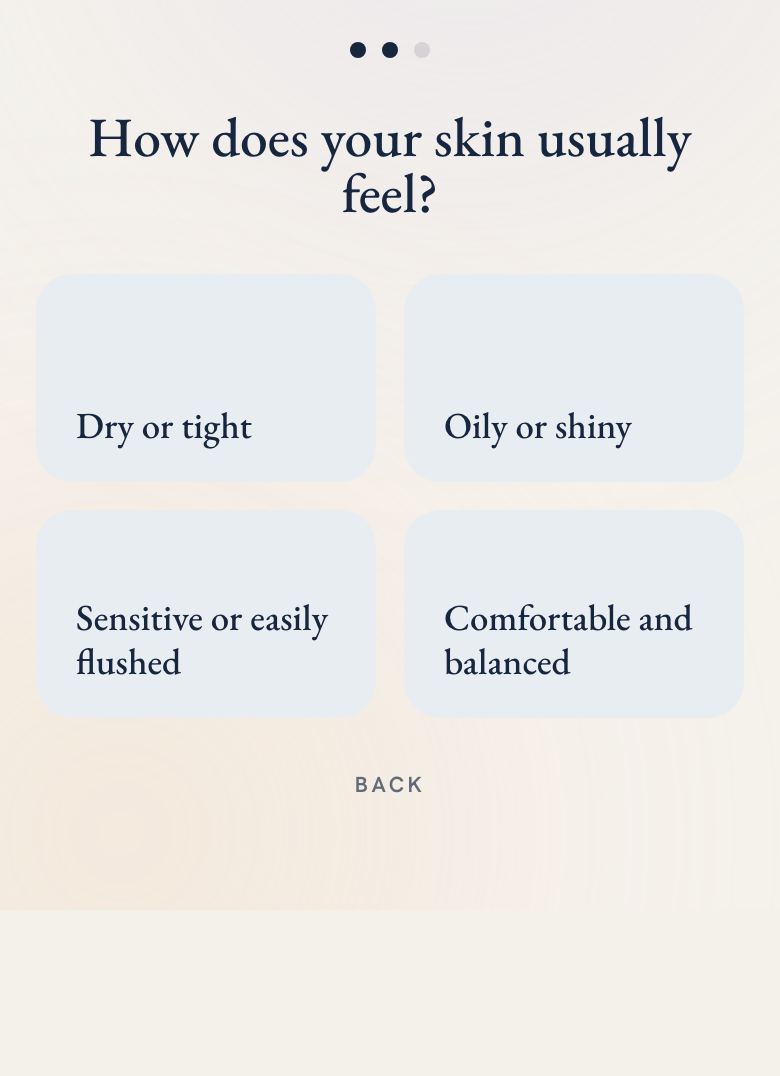
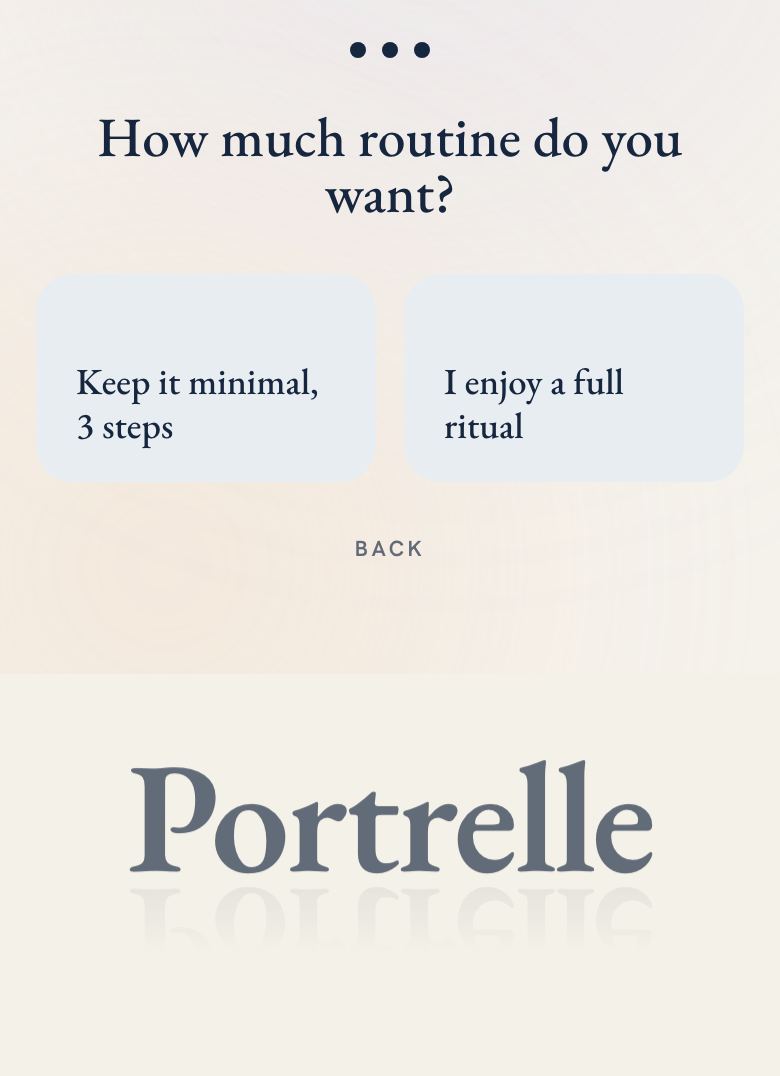

Three questions build the routine.
The answers pick the products, three steps or the full ritual. One tap puts all of it in the bag, with the 10% ritual bonus already applied.
portrelle.com, live store 123
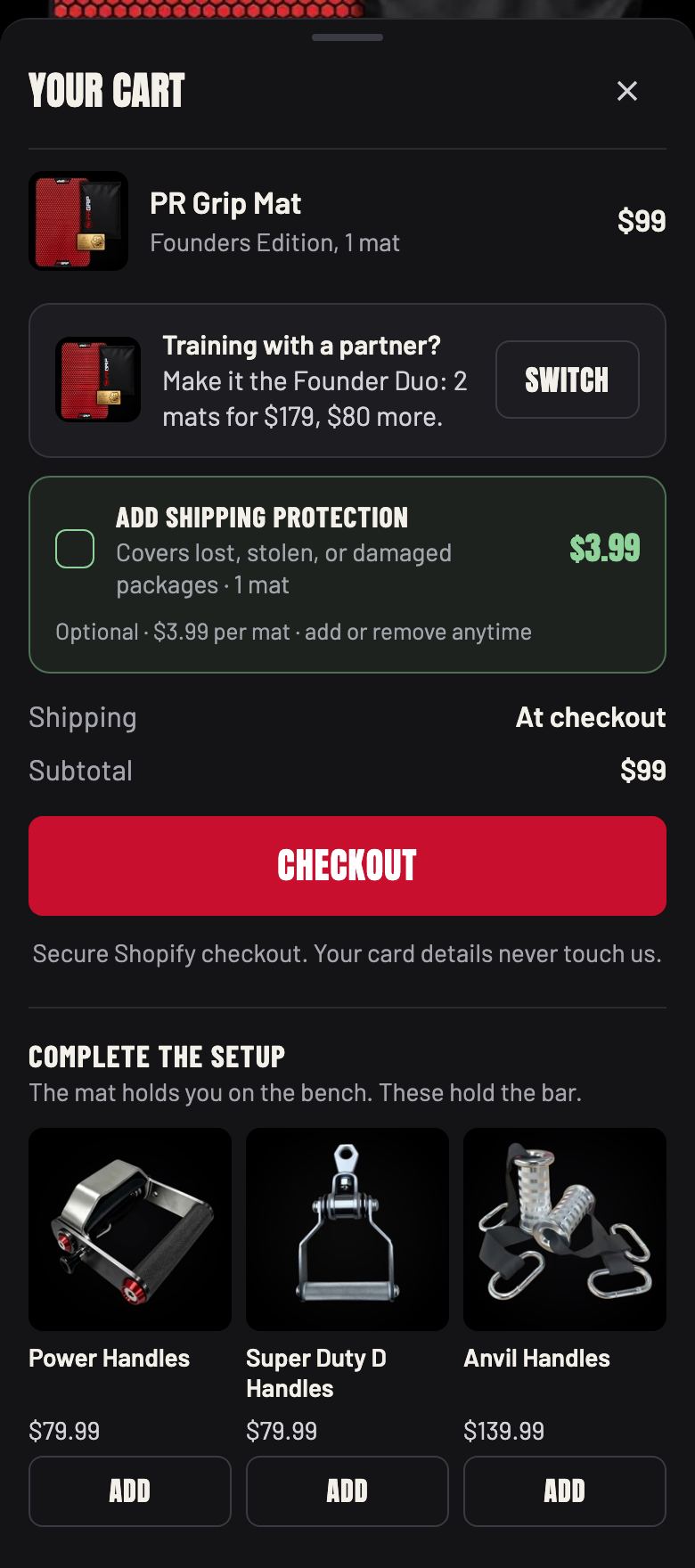
A cart that sells the next item.
One tap turns the mat into the two mat Duo for $80 more. Shipping protection is opt in and priced per mat, and the handles are one tap away.
prgrip.com, live storeOrdered Sunday before 14:00. With you on Tuesday.
The delivery date moves with the shopper’s clock.
Worked out in the browser on every visit, so it is never a day stale. Shown for an order this Sunday, dated on your clock.
phrasestudios.com, live store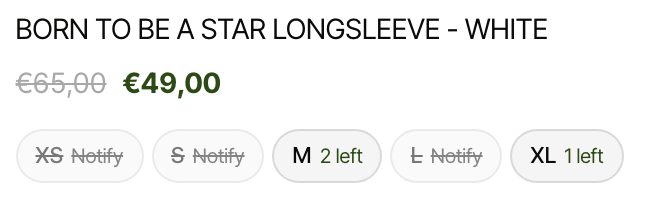

Every size says how many are left.
Sold out sizes are struck through and low ones show the count, on the collection card and on the product page.
phrasestudios.com, live storeWhere the 901 links point
- Journal articles 561
- Collections 179
- Products 15
- Info pages 73
- Other 73
Every article hands the reader a next page.
901 links written into 101 Journal articles, at least three in each, mostly to other articles and to the collections.
Counted on phrasestudios.com, all 101 Journal articles, October 2026Three stores we designed and built.
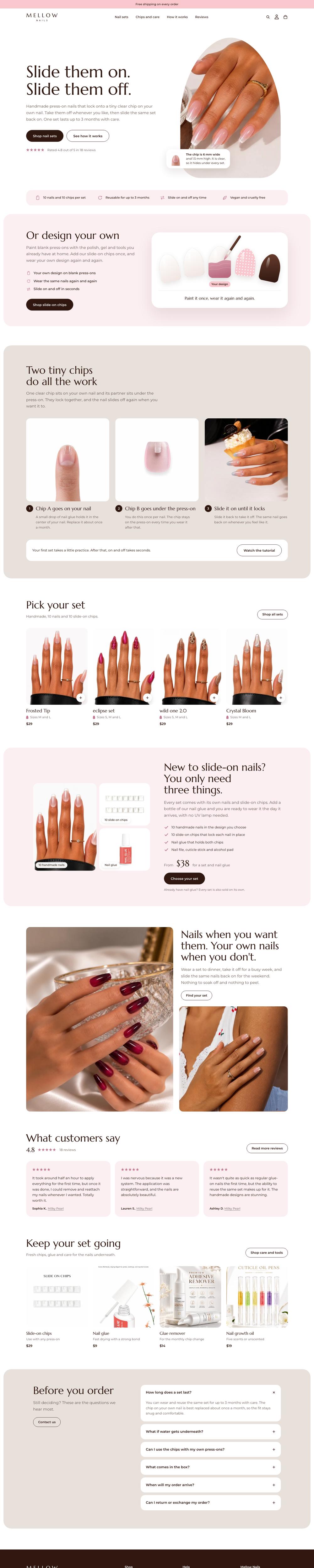

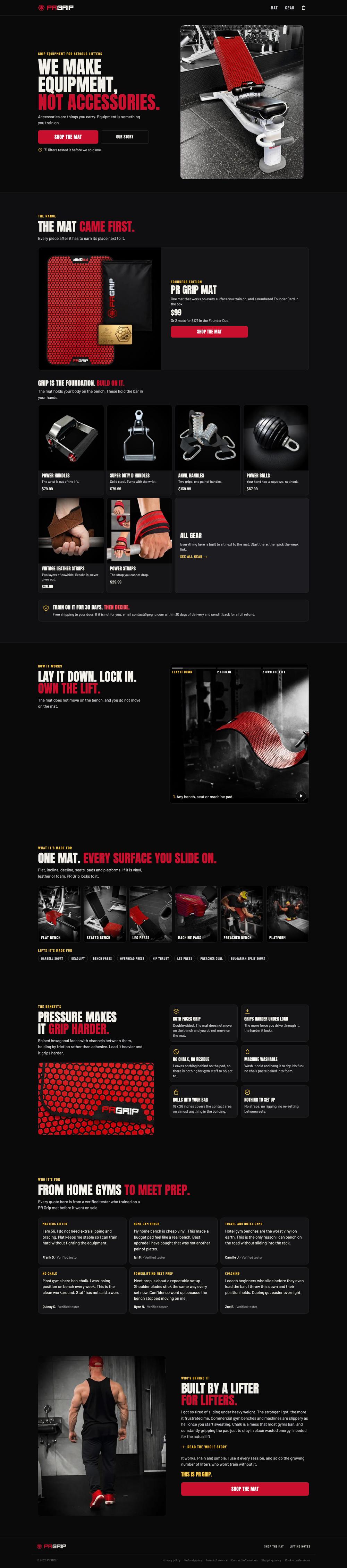

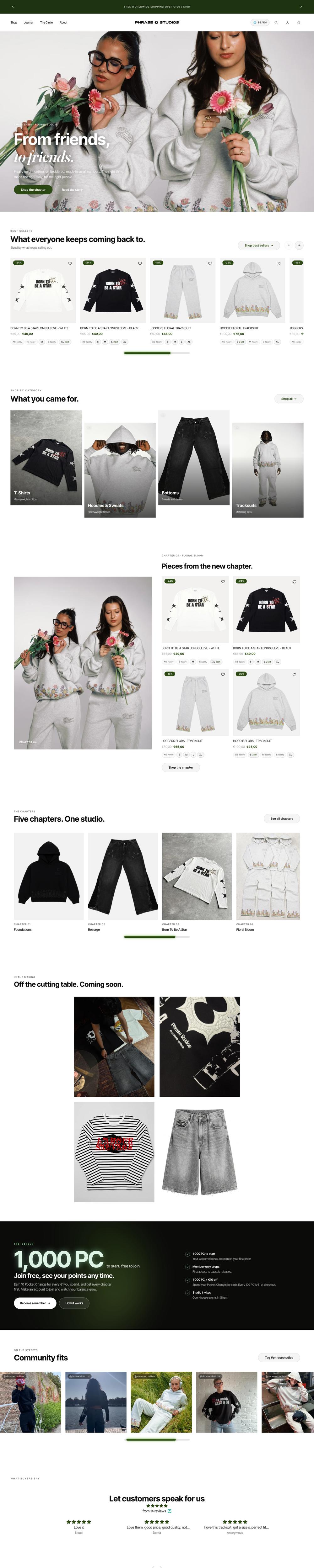

Store redesign live since September 2026.
- Set picker
- Bundles of 2 to 4 sets
- Cart upsell
- Free shipping bar
Store for an anti-slip lifting mat, from the product page to the journal.
- Product page
- Gear and kits
- Journal of 34 articles
- Schema for Google and AI
Our own streetwear store and the Journal, 101 articles in English and Dutch.
- Shopify
- Journal of 101 articles
- English and Dutch
- Answer first articles
Hover a screen to scroll the page.
The store gets worked on in four places at once.
Build, merchandising, friction and testing. We don’t open with an experiment: a better bundle, a properly built upsell or a clearer shipping threshold is a decision, not a test. Three of the four pay before a single test reaches significance, which is why they go first.
Build5
- Design
- Templates
- Theme code
- Speed budget
- Launch
Merchandising5
- Bundles and sets
- Product page upsells
- Guided quiz
- Basket drawer
- Free shipping bar
Friction5
- Product page
- Basket
- Checkout
- Mobile
- Search and filters
Testing4
- Sized before launch
- Tests live
- Honest verdict
- Test log
The order we work in, from the week you say go.
- 01Week 1
Find where the money leaks
The funnel by step, device and source, plus the value of each leak.
- 02Weeks 2 to 4
Build the value levers first
Bundles, sets, product page upsells and basket mechanics.
- 03Then
Fix the friction
Product page, basket and checkout, in the order the diagnosis ranked them, with speed treated as a revenue number rather than a score out of a hundred.
- Every week after
Test, read, keep or kill
One test at a time, sized in advance, reported with an honest verdict including the ones that proved nothing.
What actually moves the account.
The store itself, when it needs building
Some sites cannot be tested into shape. When the template is the problem we design and build the replacement, launch it, and carry the conversion work straight through the rebuild instead of starting the thinking again on the other side of it. A rebuild is also the cheapest moment to fix what the theme was doing to search, which is SEO on Shopify.
Diagnosis before ideas
The funnel broken out by step, device and traffic source. Until you know which step leaks, a test is just an expensive way of having a preference. It also settles whether there is a problem at all, because what counts as a good conversion rate depends on the category more than on the store.
Bundles and sets, priced to be obvious
A set that shows what it saves against buying the pieces separately turns one purchase into three. It is the fastest lift in average order value there is, and it is a build, not a test.
Upsells inside the product page
A complete the set block with live totals, on the page where intent is already highest, rather than a popup after the decision has been made.
Guided selling
A short quiz that routes a visitor to the right product beats a category grid for anyone who does not already know what they want, and it earns an email address on the way through.
Basket mechanics that keep working
A free shipping progress bar, an add to basket that never leaves the page, and a drawer that makes the next item easy. Small mechanics, compounding effect.
Tests sized before they run
We calculate what a test needs to reach significance before starting it. A test that cannot get there is a decision handed to noise.
What you get every month.
A ranked list of where the funnel leaks
With the size of each leak, so the order of work is arguable rather than assumed.
Built features, not recommendations
Bundles, upsells, quizzes and basket mechanics implemented and live on your theme.
Honest test reporting
Including the losers and the inconclusive ones, so the same idea is not retested next year.
A record of everything tried
Kept as a document you own, so the knowledge survives any change of supplier.
Nothing on this list is yours to chase.
- Us 7
- Together 1
- You 1
- Tests liveTwo at all timesUs
- Merchandising and theme build workEvery weekUs
- Funnel read by step, device and sourceEvery monthUs
- Speed and Core Web Vitals checkEvery monthUs
- Test verdicts written up, losers includedEvery testUs
- Seasonal and campaign pagesAs the calendar needs themUs
- Written reportEvery MondayUs
- CallEvery weekBoth
- Approving a design directionWhen it changesYou
Two ways to pay for the conversion work.
A fixed monthly fee for the testing programme, or a commission on the lift instead of most of that fee. A store build or rebuild is quoted on its own, once, against a scope we agree first.
A fixed monthly fee
One amount, agreed before anything starts and unchanged when a month turns out heavier than the last one.
- Set by what the business needs, never by the hour
- No percentage of your media budget on top
- Reviewed once a quarter, never mid-month
A commission on the growth
Most of the fixed fee comes off and we take a share of what the work adds, measured against the same month a year earlier.
- Read from your own numbers, not from what a platform claims
- Capped, so a very good month never becomes a penalty
- You keep the accounts either way, permanently
There is no rate card. Which structure fits, and what the number inside it is, depend on what the business actually needs: margin, seasonality and how much growth is already in motion. We’ll tell you which one we’d recommend and why, in the same document as the number.
See what it would costChannels aren’t run in isolation.
What we learn in one shows up in the others, which is why we run them from the same desk rather than treating each channel as a separate account.
- Meta advertisingStructure, creative and measurement that survive contact with reality.
- Google advertisingSearch, Shopping and Performance Max, starting with the feed and the products that actually matter.
- SEO and GEOPages built for the searches people make, and the AI engines increasingly shaping how they discover brands.
- Klaviyo and emailFlows and campaigns that turn the audience you’ve already paid to acquire into more revenue.
- Creative directionHooks, angles and the brief your team produces from, judged against what performs.
The questions that come up first.
Do you build the store, or only test it?
Both, and the audit says which. Some sites cannot be tested into shape, and when the template is the problem we design and build the replacement, launch it, and carry the conversion work straight through the rebuild instead of starting the thinking again on the other side.
Where does the conversion work start?
With the funnel broken out by step, device and traffic source. Until you know which step leaks, a test is an expensive way of having a preference.
How many tests run at once?
Two at all times, sized before they launch, and every one gets a written verdict including the losers. Three of the four workstreams pay before a single test reaches significance, which is why they go first.
What lifts average order value fastest?
Bundles and sets, priced so the saving is obvious. A set that shows what it saves against buying the pieces separately turns one purchase into three, and it is a build rather than a test.
Is a store rebuild included in the monthly fee?
No. The conversion programme is a fixed monthly fee or a commission on the lift, and a store build or rebuild is quoted on its own, once, against a scope we agree first.
Mobile converts at a fraction of desktop. Can you find out why?
That is a diagnosis, not a guess. The funnel gets read by device, the product page, basket and checkout get walked on a real phone, and speed and Core Web Vitals are checked every month.
Let’s see what’s holding your growth back.
Send the brand, the channels and roughly what you spend. Your written audit follows within two days.
Or write to hello@roasdept.com
Pick what matters and the audit is written around it.